Here to tell you more are Ben Darnault and Daniel Baron. Yes, Daniel is your man in Napa, but early on in his career he worked for 12 months at the famed Château Pétrus, later making a triumphant return to Bordeaux with Angel funding. They sat down to answer our quick-fire questions on the challenges of French wines, favorite food pairings, and, of course, a guide to their favorite French haunts.
What makes the region so special?
Ben: Because I get to make my mark within something that's 2,000 years old. People have been growing vines here since Roman times, and in the Minervois it's not unusual to find vineyards over a century old. Wine has been part of French culture forever – it's not just a drink; it goes hand in hand with our lifestyle, our food, our cheeses. Almost every part of France makes wine, and it's woven into the culture of each territory. We have a word for it: terroir. That's why the same grape variety can taste completely different depending on the region — even depending on the soil just a few metres apart.
Daniel: After a 38-year hiatus, I am deeply moved to be able to make wines in France. It is a privilege to be accepted as a knowledgeable professional in a region whose wines have defined quality in winemaking for over a century.
If you close your eyes while drinking your wines, what part of the landscape would you taste?
Ben: You can't pin France down to one specific taste. Our position on the continent, our hills and mountains, and our huge range of climates and soils mean you can grow almost any grape here – from Riesling to Mourvèdre. Any style, any flavor, can be made in France depending on where you are. Mediterranean France in particular has reinvented itself over the last 30 years, now growing nearly every grape variety, almost becoming a "new world" production area in its own right – in dialogue with places like Australia, South Africa, and the USA.
But if we're talking specifically about the Languedoc and the south: you'd taste the garrigue — wild rosemary, thyme, and scrub growing between the vines and perfuming the air; the limestone and schist soils that force the vines to work hard for their fruit; and the relentless Mediterranean sun and the Cers wind that keep the grapes healthy.
Daniel: I can get very poetic about the concept of landscape or “terroir” as we call it in winespeak. With my Graves rouge and blanc, the gravelly soil translates into wines with intense varietal character and concentration. In Saint-Émilion, it is the balanced acidity and low pH of calcareous soils. And in Pomerol, it is the unique combination of clay soils and Merlot that gives the wines their characteristic richness and generosity. But I also think of the cultural and historic landscape of 6 or 8 generations of winegrowers passing their knowledge and sensibilities down through time, the human terroir that brings together a region, a people with its wine and its cuisine. Hard to beat a plate of oysters with a white Graves and a bloody rare steak frites with a Saint-Émilion with a group of friends in an open-air French brasserie. That’s a landscape I love!
What is the biggest misconception about French wines?
Ben: That "French wine" means Bordeaux or Burgundy — the big names, the big prices. People forget the south, the Languedoc-Roussillon, where some of the most characterful, honest wines in the country are made, by people who've been doing this for generations. For decades, the south of France was known for bulk wine. But in the last 30 years there's been a real revolution – huge energy and investment have gone into this golden region, which has such a variety of terroir that it feels almost like its own country.
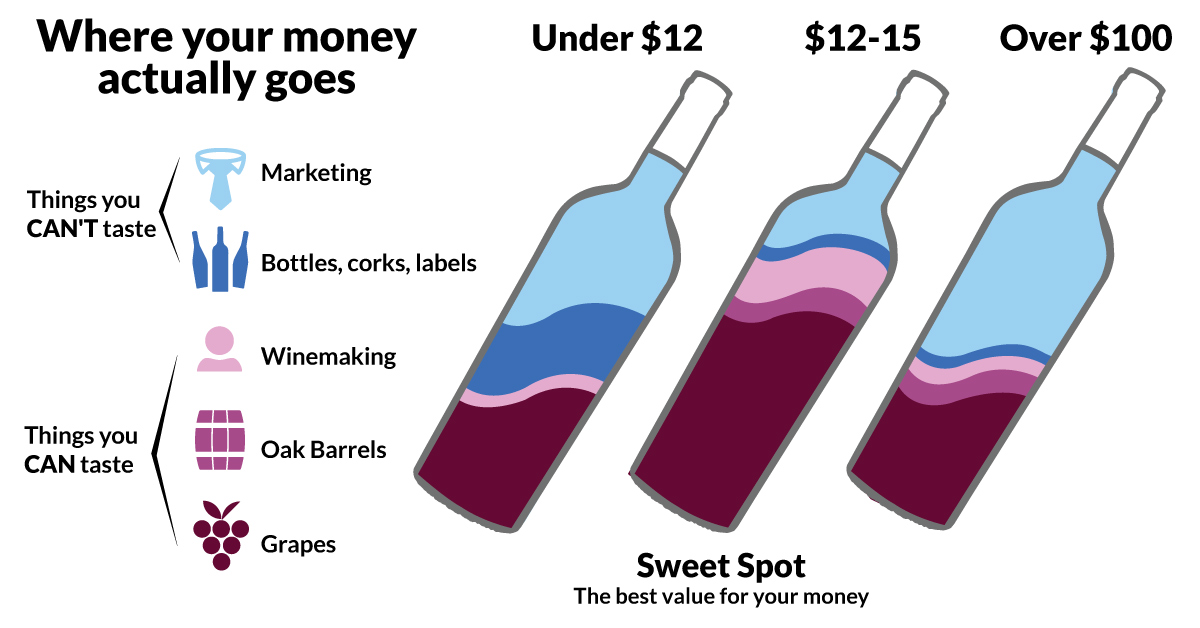
Daniel: I think the two biggest misconceptions about wines from France are that you need to be highly wine-educated to appreciate them and that to get quality, you need to pay a great deal of money. When you know where to look, you can find incredible wines without paying top price. The wines I am making from Bordeaux are extremely reasonably priced, are readily enjoyable, and of great quality.
What makes it a challenging place to make wines?
Ben: The heat and the dryness – summers here are punishing, and every year is a negotiation with drought. The soils are poor and stony, which is great for concentration in the wine but hard work for the vines. And because I work across so many small growers and parcels rather than one single estate, part of the challenge – and the reward – is coaxing consistency and quality out of fruit from dozens of different sites each vintage.
Daniel: I would say that the biggest challenge in making wine in Bordeaux is adapting to the large variation in growing conditions from one season to the next. The climate is much more variable than it is in California, and a winemaker must adapt to each season and make wines that are an authentic expression of each vintage.
What local dish would you recommend with your wines?
Ben: It depends on the season — I'm a strong believer we should eat with the seasons, for fruit and vegetables, but also meat. In spring, nothing beats a slow-baked lamb or goat with a jardinière de légumes, paired with a light young red from the previous vintage. In summer, it's ripe, delicious tomatoes in a ratatouille with a glass of rosé. In winter, we love a stew made with local pork and root vegetables.
Daniel: White Graves – Arcachon oysters; red Graves – rare steak frites cooked over “sarment de vigne” (grapevine cuttings); Saint Emilion – Lamproie à la bordelaise (lamprey eel cooked with leeks and a sauce of its blood and Saint Emilion wine and then put up in preserve jars); Pomerol with duck confit and scalloped potatoes.
How has Angel support allowed you to make your wines?
Ben: Angels are the reason I have my own label at all. After the financial crash cost me my job, it was Angel funding that let me set up on my own and finally put my name on a bottle. That support means I can maintain long-term relationships with growers across the region – I pay them above market rate – so we keep building quality together, vintage after vintage, instead of chasing the cheapest fruit each year. Over the last 15 years, Naked and I have built an amazing relationship where we listen to each other's needs, and where we can invest in finding the best grapes to make the most interesting wines.
Daniel: Without the support of the Angels and the Naked Wines team, I could never have achieved this dream. I would never have attempted to do this without the safety net that Naked has provided. I am in deep gratitude for this opportunity. It is a bit of a miracle to close the circle.
How do your regions influence the wines you make?
Ben: Soil, surroundings, climate, and microclimate are the three keys to a wine's taste. For climate, you choose the right spot. For soil, it's the same – but just as important is how you farm it to keep it alive. Over the past 20 years, I've developed practices to support this: biodynamics, cover crops, compost. The earth acts like a mother nursing her baby – the vines can't access nutrients in the soil if the soil itself isn't alive, much like a baby can't be nourished if the mother isn't healthy.
All of this gives you the potential in the grapes. The winemaker is here to express that potential — I can't make a better wine than the potential that already exists, but I can fail to get the best out of it if I don't make the right decisions. That's the winemaker's job: to use that potential to its fullest and show what the terroir has given.
Daniel: I have learned a few basic truths in over 5 decades of grapegrowing and winemaking. One of those is that I can’t be in two places at once, though heaven knows I have tried. In order to make wines in two widely separated regions in the Northern Hemisphere, I need to have reliable collaborators in one of those regions who share my approach to making authentic wines that reflect the terroir and the vintage. I did many interviews in Bordeaux in 2021 and found a few people who are a joy to work with. The resulting wines reflect their approach to fermentation, and the final blends reflect my interpretation of each vintage and region.
How would you describe your region to someone who’s never visited?
Ben: Rich in its simplicity, anchored in tradition, incredibly varied from site to site. It's probably one of the regions in France where authenticity is still strongest. We live in an economically poor region – there's no industry here, and vineyards and olive trees are almost our only resource. But that relative poverty is exactly what makes the region so community-driven and lifestyle-focused.
The Minervois is a rugged, sun-drenched pocket of the Languedoc – hills covered in vines, wild herbs, and stone villages that haven't changed much in centuries. It's special because winemaking isn't a business here so much as an inheritance; the vines and the traditions have been passed down for two millennia, and you can feel that history in every glass.
Daniel: The history of the Bordeaux region is deep and long and involves not only the French, but also the English influence. The Graves area on the left bank of the Gironde, with its deep gravelly soils, is a worldwide touchstone for classic Cabernet Sauvignon-based wines. Saint-Émilion and Pomerol, the chief right bank appellations, are famous for Merlot-based wines. The wines of Saint-Émilion are elegant and refined; the wines of Pomerol richer and more generous.
What made you fall in love with your region – and what keeps you there?
Ben: My wife, Kat, is from South Australia. She always tells me that when she first arrived here in 1998, it felt like home straight away.
The nature is spectacular and generous. The people can seem hard and rough at first — this has always been an isolated area, and people have lived through tough economic conditions. It takes time to break the ice, but once you do, it's worth it.
Daniel: From my earliest days studying wine at UC Davis, I was intrigued by the purity of expression of the wines of Bordeaux and how they resonated with history. That deepened into a deep love and respect for the craftsmanship and attention to detail of the winemaking and its seamless integration into the cuisine and way of life in the winegrowing communities of the region. And of course the inherent quality of the wine and its beauty at the table.
If a friend were visiting, what are your top 3 can’t-miss experiences?
Ben: For sights, the Minerve, a medieval hilltop village, and Carcassonne, the walled citadel. For dining, Biquet Plage, a legendary restaurant at Leucate beach, followed by dinner at Le Grand Café Occitan. And if time allows, the Tuesday morning food market in Olonzac village is a wonderful experience.
Daniel:
1) Walking the cobblestone streets of the 11th-century village of Saint-Émilion
2) A private tour and tasting at Château Pétrus
3) Grilling a thick “bifteck d’aloyau” (T-bone steak) on sarment de vigne accompanied by a magnum of 1982 Château Trotanoy from his father’s cave with my dear friend FrançoisVeyssiere, the retired cellarmaster of Château Pétrus. His father, Jean, was also the cellarmaster at Pétrus, and the bottle hadn’t traveled more than 8 km from where the grapes were grown, fermented, and bottled over 40 years ago. That’s a true Bordeaux experience!